How to Choose the Best Immersion Blender for Smoothies and Soups: A Complete Guide
By OneIDDeal™ | Published: 2026-06-25
Category: How-to Guides
Discover how to choose the best immersion blender for silky soups and creamy smoothies. This complete guide covers power, speed, attachments, and top picks for 2025.
Whether you're whipping up a quick berry smoothie or pureeing a pot of roasted tomato soup, an immersion blender—also called a handheld blender—is one of the most versatile tools in a modern kitchen. Unlike bulky countertop blenders, an immersion blender lets you blend directly in the pot, pitcher, or even a tall glass, saving you time and cleanup. But with so many models on the market, how do you choose the best immersion blender for your needs? This comprehensive guide walks you through everything you need to know: from motor power and blade design to accessories and budget considerations. By the end, you'll be ready to select a smoothie blender or soup blender that fits your cooking style perfectly.
Why Choose an Immersion Blender Over a Countertop Blender?
Before diving into the selection criteria, it helps to understand the unique advantages of an immersion blender. A traditional blender requires you to transfer hot soup into a pitcher in batches—risking splatters and burns. A handheld blender eliminates that hassle. You simply submerge the shaft into the pot and blend until smooth. For smoothies, you can blend directly in a tall cup or the container you plan to drink from, reducing dishes. Immersion blenders are also easier to store, often taking up less drawer or cabinet space than a full-size blender. If you frequently make single-serving smoothies or small-batch soups, an immersion blender is a game-changer.
Key Factors to Consider When Choosing the Best Immersion Blender
Motor Power and Speed Control
Motor wattage is one of the most critical specifications for any immersion blender. Higher wattage (typically 300 to 800 watts) means more torque to crush ice, frozen fruit, and fibrous vegetables. For tasks like making a thick green smoothie or pureeing chunky vegetable soup, look for at least 500 watts. Variable speed control is another must-have feature. Models with a dial or multiple speed buttons allow you to start slow to prevent splashing and then increase speed for finer blending. Some top-tier blenders also include a turbo button for an extra burst of power.
Blade Design and Build Quality
The blade shape and material affect blending efficiency and durability. Stainless steel blades are standard on quality models—they resist rust and stay sharp longer. Look for blades with a serrated edge or a curved design that creates a vortex, pulling ingredients down toward the blade. A bell-shaped guard around the blade also helps reduce suction and prevents the blender from sticking to the bottom of the pot. For heavy-duty use, a model with a reinforced shaft and a die-cast metal body will outlast plastic alternatives.
Attachments and Versatility
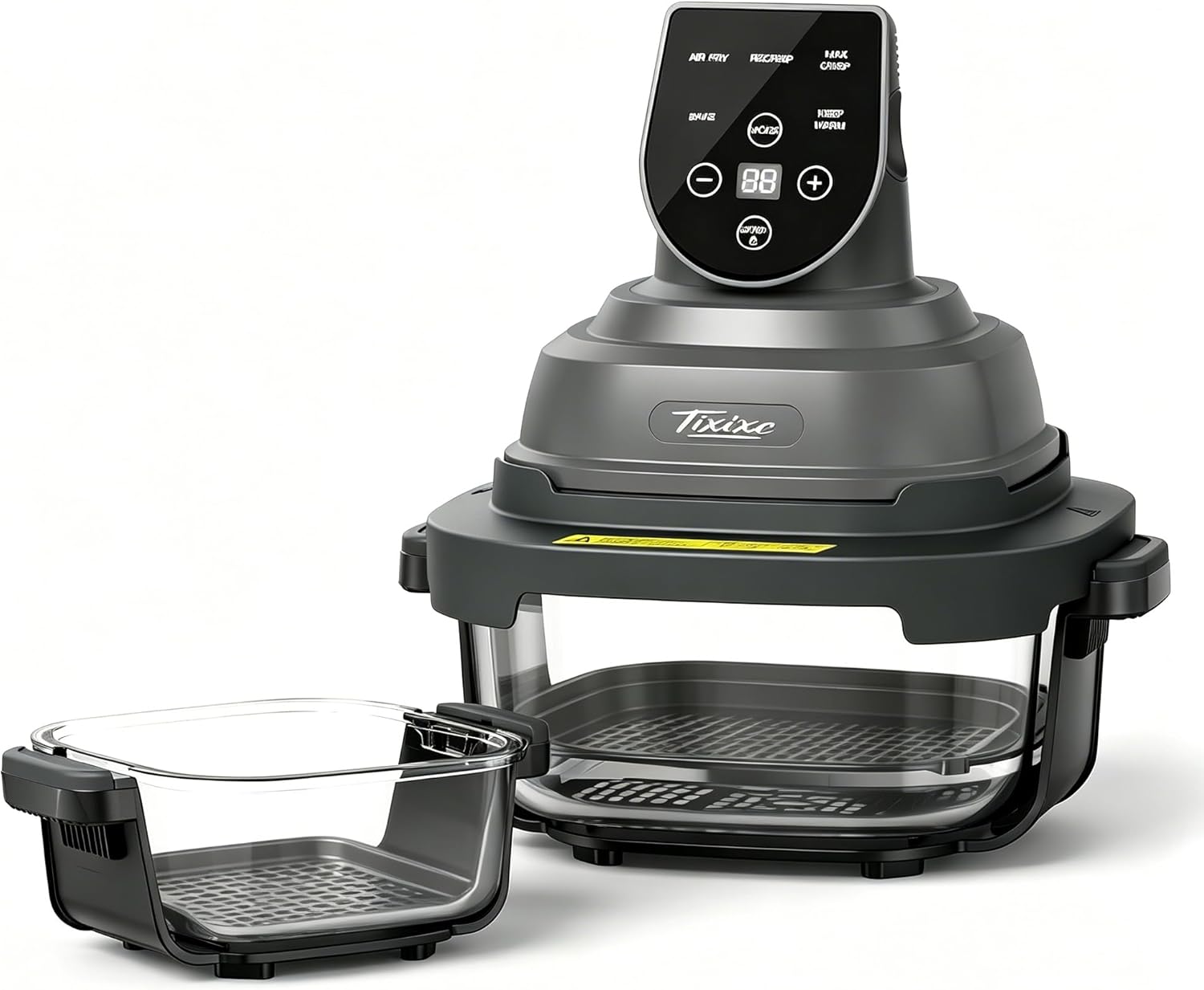
Many immersion blenders come with additional attachments that expand their usefulness. A whisk attachment is excellent for whipping cream or egg whites. A mini chopper or food processor attachment lets you chop nuts, herbs, or onions. Some models even include a frother for coffee drinks or a blending jar for single-serve smoothies. If you plan to use your handheld blender for more than just soups and smoothies, consider a kit with multiple accessories. For example, the 5-in-1 Glass Air Fryer is a fantastic countertop companion for crispy meals, but pairing it with a versatile immersion blender can round out your kitchen prep tools.

Ergonomics and Ease of Use
Since you'll be holding the blender for several minutes at a time, comfort matters. Look for a model with a soft-grip handle and a well-balanced weight distribution. A lightweight blender (under 2 pounds) is easier to maneuver, especially when blending hot liquids. Buttons or triggers should be easy to press without straining your fingers. A cord length of at least 4 feet gives you flexibility to reach outlets across the counter. For the ultimate convenience, some cordless immersion blenders are now available, though they may have slightly less power than corded ones.
Immersion Blender vs. Countertop Blender: Which Is Better for Smoothies?
For smoothie lovers, the choice often comes down to volume and texture. If you make large batches (more than 32 ounces) or need to crush ice into a snow-like consistency, a high-performance countertop blender may still be superior. However, for individual smoothies or small servings, an immersion blender is faster and easier to clean. Simply put your ingredients in a tall cup, insert the blender, and pulse. You can even blend directly in a mason jar if the blender shaft fits. For those who want the best of both worlds, owning both a countertop blender and an immersion blender is ideal—but if you're on a budget, a quality immersion blender can handle 80% of your blending tasks.
How to Use an Immersion Blender for Soups
Immersion blenders shine when it comes to soups. Whether you're making creamy butternut squash, lentil, or tomato soup, the process is simple: cook your ingredients in a pot, then blend them directly in the pot. To avoid splatters, use a deep pot and tilt the blender slightly while running it at a low speed initially. Move the blender in a gentle up-and-down motion until the soup reaches your desired consistency. For chunky soups, pulse briefly; for silky smooth results, blend for 30–60 seconds. Always ensure the blender is fully submerged before turning it on to prevent air from being sucked in, which can cause splashing.
Top Features to Look for in 2025
- Easy-clean shaft: Removable blending shafts that are dishwasher-safe save time. Some models also offer a self-cleaning feature by blending warm water with a drop of soap.
- BPA-free materials: All parts that come into contact with food should be BPA-free plastic or stainless steel.
- Quiet operation: Look for blenders with noise-dampening technology, especially if you blend early in the morning.
- LED display or battery indicator: Cordless models often include a battery level indicator so you don't run out of power mid-blend.
- Storage case: A storage case or wall mount helps keep attachments organized and within reach.
Budget Considerations: Finding Value Under $50
You don't need to spend a fortune to get a reliable immersion blender. Many well-reviewed models cost between $25 and $50. In this price range, you can expect a 300–500 watt motor, stainless steel blades, and at least one speed setting. Some even include a whisk attachment. Budget-friendly blenders are perfect for occasional use—making a weekly batch of soup or a quick smoothie. If you plan to blend daily or tackle tough ingredients like frozen bananas or raw nuts, consider spending between $60 and $100 for a more powerful unit with variable speed and extra accessories. Keep an eye on deals from stores like OneIDDeal™, where you can find Angel Soft Toilet Paper and other household essentials, but also occasional discounts on small kitchen appliances.
Maintenance and Longevity Tips
To make your immersion blender last for years, follow these simple care tips:
- Rinse the blade and shaft immediately after use to prevent food from drying and sticking.
- Never submerge the motor housing—only the shaft and attachments are waterproof.
- Store the blender in a dry, clean place. If your model has a detachable shaft, disassemble it for easier storage.
- Avoid blending extremely hot liquids (above 200°F / 93°C) as they can damage the seals over time.
- Replace the blade cap if it becomes loose or cracked to prevent accidents.
Frequently Asked Questions
Can an immersion blend ice?
Yes, but only if the blender has sufficient power (500 watts or more). For best results, use smaller ice cubes or crushed ice. Some models include an ice-crushing blade specifically designed for this task.
What is the best immersion blender for hot soup?
Any model with a stainless steel shaft and at least 400 watts of power can handle hot soup. Variable speed control is recommended to avoid splashing.
Do immersion blenders work for smoothies?
Absolutely. Use a tall, narrow container and blend in short bursts. Adding liquid first helps the blades move freely. For thick smoothies, a higher wattage model works best.
How do I clean an immersion blender?
Most detachable shafts are dishwasher-safe. For manual cleaning, fill a tall container with warm water and a drop of soap, then run the blender for 15 seconds. Rinse and dry thoroughly.
Final Recommendation
Choosing the best immersion blender comes down to your cooking habits and budget. For occasional soup and smoothie making, a basic 300-watt model under $40 will suffice. For frequent use and tougher ingredients, invest in a 500+ watt blender with variable speed and a whisk attachment. Always prioritize models with stainless steel blades and a comfortable grip. Don't forget to check out the latest deals at OneIDDeal™—you might also find great complementary items like a Electric Spin Scrubber, VEWIOR Cordless Shower Scrubber to keep your kitchen spotless, or a versatile MOOKA Air Purifier for cleaner air while you cook. Happy blending!
Ready to upgrade your kitchen tools? Explore the latest deals on immersion blenders and other essentials at OneIDDeal™. Whether you're looking for a smoothie blender or a soup blender, we have options to fit every need and budget. Check out our 5-in-1 Glass Air Fryer for a perfect countertop companion that complements your new immersion blender. Shop now and transform your cooking experience!