Cordless Vacuum vs. Electric Spin Scrubber: Which Cleaning Tool Saves More Time?
By OneIDDeal™ | Published: 2026-06-27
Category: Industry News
Compare cordless vacuums and electric spin scrubbers to decide which time-saving cleaning tool fits your home—plus top deals under $100.
In today’s fast-paced world, every minute counts. When it comes to home cleaning, choosing the right tool can mean the difference between a quick tidy-up and an all-day chore. Two of the most popular time-saving devices on the market are the cordless vacuum and the electric spin scrubber. But which one actually saves you more time? In this head-to-head comparison, we’ll break down how each tool works, where it excels, and which cleaning tasks it handles best—so you can make an informed purchase.
What Is a Cordless Vacuum?
A cordless vacuum is a battery-powered stick or handheld vacuum that offers freedom from power cords and wall outlets. These devices are designed for quick cleanups on hard floors, carpets, and upholstery. Modern models often include features like anti-tangle brushes, LED displays, and HEPA filtration. They are ideal for daily maintenance—vacuuming dust, debris, pet hair, and crumbs from floors and furniture.
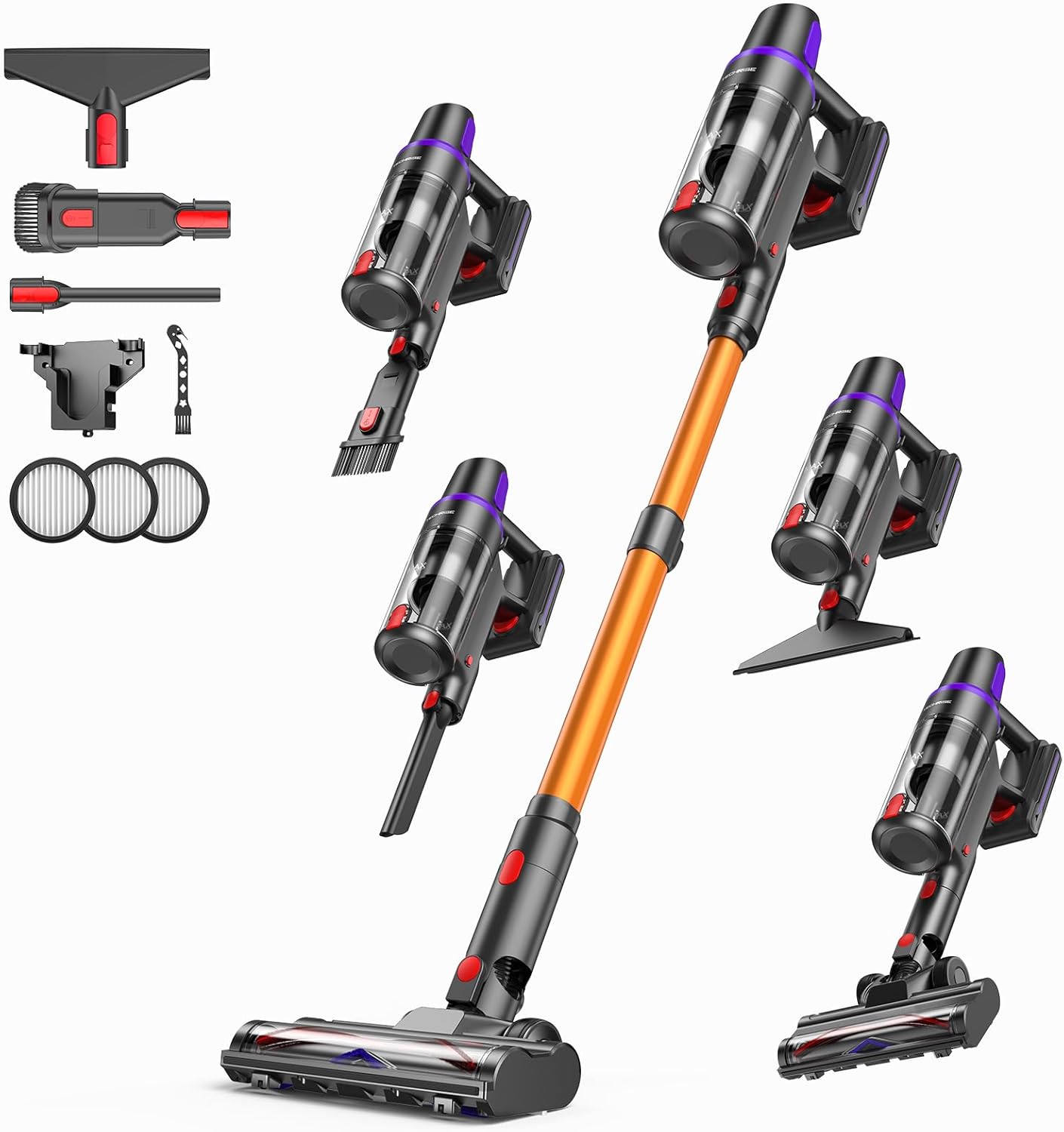
For example, the TechRise Cordless Vacuum Cleaner offers 45KPa of suction power, a 60-minute runtime, and an anti-tangle brush that works wonders on pet hair. It’s a lightweight, self-standing stick vacuum that can transition from hardwood floors to carpets in seconds.

What Is an Electric Spin Scrubber?
An electric spin scrubber (also called an electric mop or power scrubber) uses rotating brushes or pads to scrub surfaces like tile, grout, hardwood, and vinyl. Many models are cordless and rechargeable, allowing you to clean floors, walls, showers, and even windows without manual elbow grease. They often come with water spray functions and multiple brush heads for different tasks.
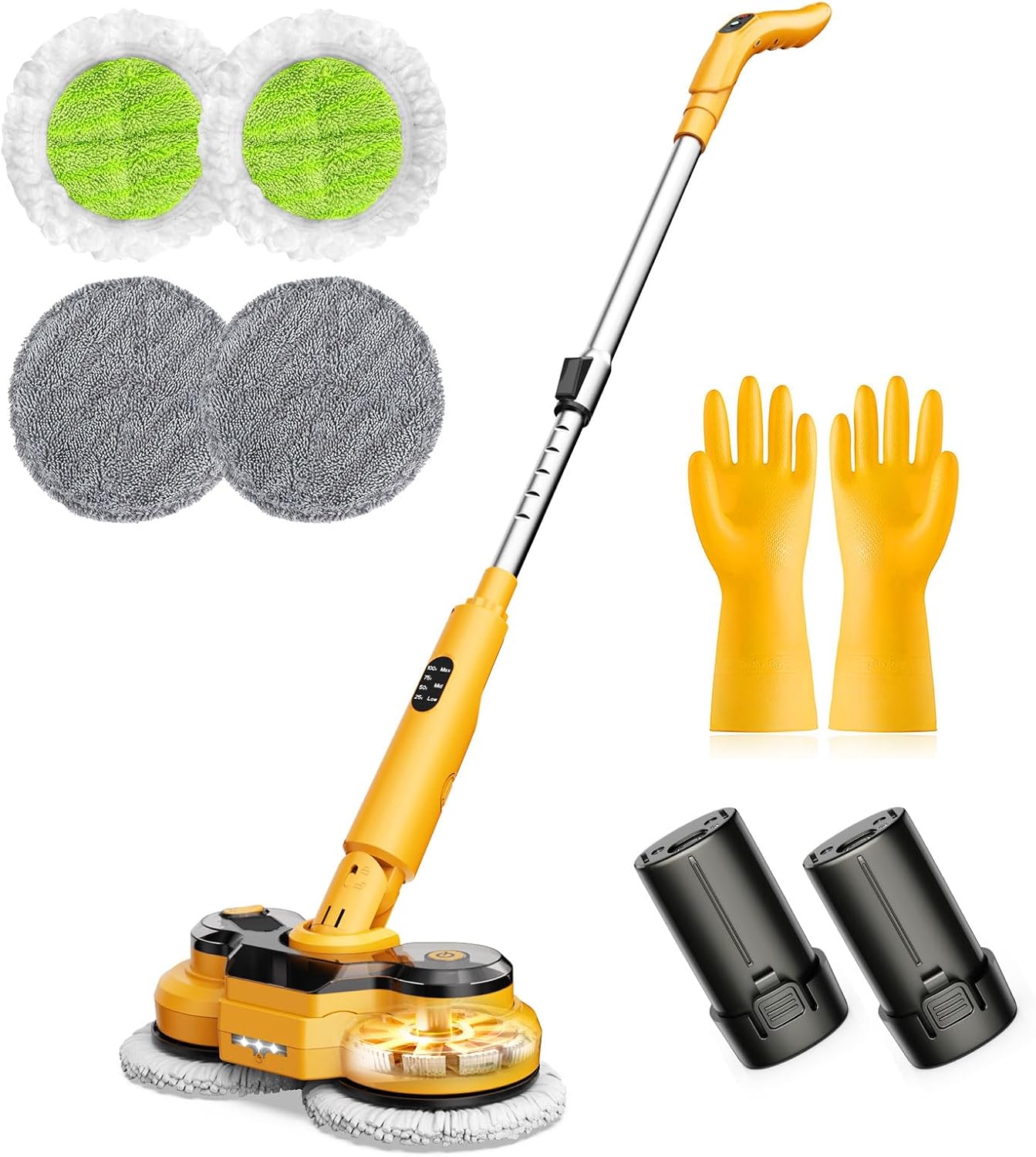
The qimedo 800RPM Cordless Electric Mop is a prime example. It features a 6000mAh battery, a smart LED display, and a water spray system. It spins at 800 RPM to scrub stuck-on messes and can be used on sealed hard floors, tile, and grout—all while requiring minimal physical effort.
Time-Saving Comparison: Vacuum vs. Scrubber
| Cleaning Task | Cordless Vacuum | Electric Spin Scrubber |
|---|---|---|
| Daily floor dust & crumbs | ✅ Fast & efficient | ❌ Not designed for dry debris |
| Pet hair on carpets | ✅ Excellent with anti-tangle brush | ❌ Not suitable |
| Mopping & scrubbing grout | ❌ Cannot scrub | ✅ Excellent with rotating brushes |
| Bathroom tile & shower | ❌ Not waterproof | ✅ Very effective |
| Kitchen spills & sticky floors | ❌ Dry only | ✅ Great for wet messes |
| Upholstery & curtains | ✅ With attachments | ❌ Not recommended |
| Time per small room (approx.) | 5–10 minutes | 10–15 minutes |
Clearly, these tools are complementary rather than competitors. A cordless vacuum saves time on dry debris and pet hair, while an electric spin scrubber saves time on wet scrubbing and deep cleaning of hard surfaces.
Which Tool Saves More Time for Your Home?
If You Have Pets or Allergies
If you share your home with a furry friend, you know that pet hair can accumulate faster than you can vacuum. A cordless vacuum with a strong motor and anti-tangle technology is your best bet for daily maintenance. The TechRise model we mentioned earlier is especially effective for pet owners—it has a 500W motor and a self-standing design that makes it easy to grab and use whenever you see hair on the floor.
If You Have Tile Floors or Bathroom Grime
For bathrooms, kitchens, and any room with tile or grout, an electric spin scrubber is a game-changer. Manual scrubbing can take 20 minutes per bathroom—using a power scrubber cuts that time in half. The qimedo Cordless Electric Mop is perfect for this: its rotating head does the hard work, and the LED display lets you monitor battery life so you never run out of power mid-clean.
Can One Device Do Both?
Some hybrid models exist, but most home cleaning experts agree that no single tool excels at both dry vacuuming and wet scrubbing. A cordless vacuum is not waterproof and cannot scrub, while an electric spin scrubber cannot pick up dry dust or pet hair. That’s why many homeowners choose to own both: one for quick daily touch-ups, the other for weekly deep cleaning sessions.
If you’re looking to save the most time overall, consider a two-device strategy. Use the cordless vacuum for floors, carpets, and upholstery, then break out the spin scrubber for the bathroom and kitchen once a week. The total time investment is often less than 30 minutes per day for a medium-sized home.
Budget Considerations: Best Deals Under $100
Both tools are available at affordable price points. Here are some top-rated options you can find at OneIDDeal:
- Cordless Vacuum: TechRise Cordless Vacuum Cleaner – under $100 with powerful suction and long battery life.
- Electric Spin Scrubber: qimedo 800RPM Cordless Electric Mop – also under $100, with a 6000mAh battery and smart display.
- Budget Vacuum: Bissell CleanView Compact Upright Vacuum – a lightweight, affordable corded option for dorms and apartments.
Investing in either (or both) of these tools can dramatically reduce the time you spend on household chores, giving you more hours for relaxation, family, or hobbies.
Conclusion: Choose the Tool That Matches Your Mess
In the battle of cordless vacuum vs. electric spin scrubber, there is no single winner—both save time in different ways. If your biggest cleaning challenge is daily dust, pet hair, and crumbs, a cordless vacuum is your fastest ally. If you struggle with soap scum, grout, or sticky kitchen floors, an electric spin scrubber will cut your scrubbing time in half.
For most homes, the best time-saving strategy is to own both. Start with a high-quality cordless vacuum for quick daily pickups, then add an electric spin scrubber for weekly deep cleans. Your future self—and your back—will thank you.
Ready to upgrade your cleaning routine? Explore the TechRise Cordless Vacuum Cleaner today and enjoy powerful, cord-free cleaning in minutes.